
May 14, 2026
How Hard Is It to Get a K-1 Fiance Visa in 2026?
One in Three. That Is the K-1 Fiance Visa Denial Rate Right Now.
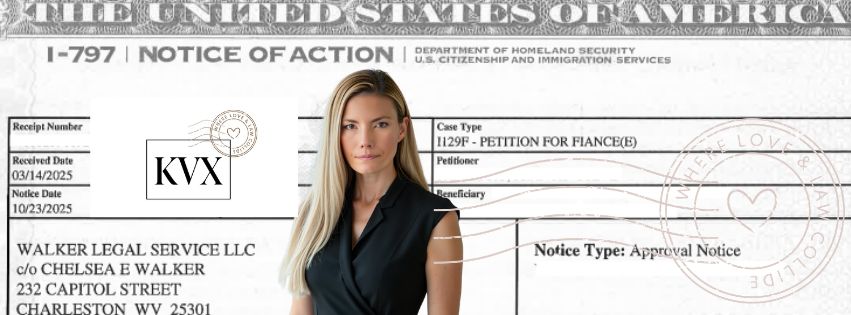
Here is what it means for your relationship, what changed quietly in 2026, and how to make sure your love story ends with a yes.
You found your person.
Maybe you met on a trip abroad. Maybe it was online, late nights talking across time zones. Maybe you have known each other for years and finally decided the distance had gone on long enough.
However it happened, you are here now. You are ready to close the gap and build a life together. And you have heard about something called a K-1 fiance visa.
Before you file anything, I want to share something important with you. Not to slow you down. Not to scare you. But because the couples who know this going in are the ones who succeed.
Your love story deserves more than a coin flip. Let’s talk.
What Is the K-1 Visa, Simply Explained?
The K-1 visa is for engaged couples. One partner is a U.S. citizen. The other lives outside the United States. The K-1 visa lets the foreign partner come to the United States to get married. Once the wedding happens, the couple can apply for a green card together.
It is a beautiful pathway. It is also the most documentation-heavy family petition in the immigration system.
And right now, it has a 32 percent denial rate.
That means nearly one out of every three K-1 petitions filed in 2025 was denied.
Not delayed. Not sent back for corrections. Denied.
Why Are So Many K-1 Petitions Being Denied?
Here is the honest answer. Most K-1 denials are not because the couple’s love is not real. They happen because the application did not show that the love is real. Those are two very different things.
Think about it this way. A USCIS officer reviewing your case has never met you. They do not know how your eyes light up when you talk about your person. They do not know the hours you have spent on video calls or the trips you have taken to be together. They only know what is in the package you sent them. And, newsflash, photos are very low on the totem pole in terms of authoritative evidence in USCIS’ eyes.
If that package is thin, incomplete, or missing the right kinds of evidence, the answer can be no. Even when the relationship is 100 percent genuine.
That is why the couple who files with a complete and well-built application has a dramatically different outcome than the couple who downloads a form and figures it out as they go.
Your relationship is real. Let’s make sure your application shows that. Contact KVisaXpress today.
Something Changed in 2025 That Most Couples Do Not Know About
Here is the part I really want you to understand before you file.
For many years, if your petition had a problem, USCIS would send you a letter asking you to fix it. That letter was called a Request for Evidence, or an RFE. It gave you a second chance.
In August 2025, USCIS changed that policy; here we are in 2026 feeling the effects by way of denials.
Now, officers have the right to deny a petition without sending that letter first. If your application is missing something important, they can simply say no. No warning. No chance to send in the missing documents. Just a denial.
This is not meant to alarm you. It is meant to help you understand why getting it right the first time matters so much more now than it did even a year ago.
The couples who file a complete, well-prepared, thoroughly documented application are not affected by this change at all. The change only hurts people who file without the preparation that used to be forgiven.
What a Strong K-1 Application Actually Looks Like
A strong K-1 petition tells a real story. It shows a couple who met, who stayed in touch, who made plans together, and who intends to get married within 90 days of arrival in the United States (and no, saying you “plan to get married at the courthouse” often isn’t enough to show your intent).
That story needs to be supported by evidence – not just photos, although photos matter. It also needs communication records, proof of in-person meetings, a clear timeline of the relationship, and documentation that both partners are legally free to marry.
For couples who met internationally, this often means gathering documents from a foreign country, a well as marriage certificates from a prior marriage that ended in divorce, records of visits, and evidence that the couple has genuinely been in each other’s lives.
This is where having the right attorney changes everything. Not because the forms are hard to fill out. But because knowing what story to tell, and how to tell it clearly and completely, is a skill that comes from doing this work every day.
Do not leave your first submission to chance. Reach out to KVisaXpress and let’s build your case together.
What About the Marriage Itself?
Here is something most couples do not realize until they are already deep into the process.
Before you can file a K-1 visa, you need to be legally free to marry, which should sound obvious, but for many international couples, especially those who have been married before, confirming that legal freedom requires research into the laws of a foreign country.
This is actually where I start with my clients. Before we file a single immigration form, we make sure the couple is in a position to legally marry. That sometimes means tracking down foreign divorce records, or it sometimes means navigating embassy requirements or notary appointments in another country. For some couples, it means exploring whether a proxy marriage, a marriage that happens without both partners in the same room, is an option. For some people, particularly those in the Philippines, it’s actively engaging the court system to get a divorce, which isn’t easy in the Philippines, and can take years.
Getting married correctly, and getting married first, is what makes the immigration filing that follows go smoothly. It is the step that most firms skip over because they only work on the immigration side. It is the step I have built my entire practice around.
So What Should You Do Right Now?
If you are reading this and you have not filed yet, you are in the best possible position. You have time to do this right.
Here is what the couples who succeed do differently from the couples who struggle:
They start early. Not in a panicked rush, but with enough time to gather documents, research requirements, and build an application that is complete before it is submitted.
They work with someone who knows what USCIS is looking for right now, not what it was looking for two years ago. The landscape has changed. An attorney who is working in this system every day knows where the landmines are.
They do not treat this as a paperwork exercise. They treat it as what it actually is: the beginning of the rest of their life together.
The best time to start is before anything goes wrong. Let’s talk about where you are and what comes next.
A Note From Chelsea
I have been doing this work for a long time. I have seen couples who filed on their own and made it through, but with longer wait times. I have also seen couples who waited months for a K-1 approval, received a denial instead, and had to start over. The difference was almost never the relationship. It was the application.
You did not find your person to lose them to a paperwork problem, and I did not build this practice to watch that happen.
If you are in the early stages of figuring this out, whether you are newly engaged or just starting to think about what the process looks like, I want to talk with you. Not to sell you anything. Just to help you understand what your path looks like and what it takes to walk it well.
That first conversation costs nothing. I simply hope to give clarity.
How much do you love each other?
If the answer is enough to build a life around, let’s make sure nothing stands in the way.
Contact KVisaXpress. Let’s start your path to together.
About Chelsea
Chelsea E. Walker is an immigration attorney and founder of KVisaXpress. With 14 years of experience as an attorney, she focuses in helping international couples navigate both the marriage process and the immigration journey from start to finish. She is licensed in West Virginia, has three offices (West Virginia, Virginia, and California) and works with couples across the United States and around the world.

Fast, reliable immigration insights from a U.S. Immigration Lawyer
Buckle Up!
Visa Xpressway
We welcome your
Questions!
get in touch!
At KVX it is our mission to help as many people reunite with loved ones as possible. Send us a question!